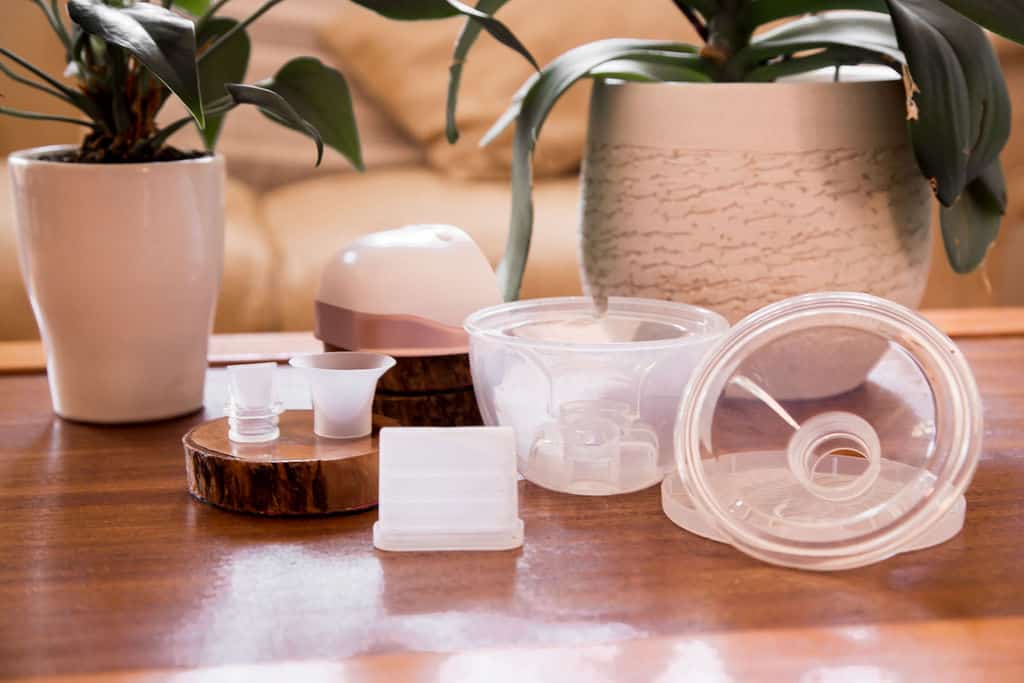
How Do I Know When To Replace My Breast Pump Parts?
Your pump works hard, often several times a day. The soft silicone parts stretch a little with every session and every wash, and once they wear, suction drops. Replacing them on time keeps your pump working the way it did on day one.
The short answer
On average, replace your silicone pump parts every 3 to 6 months, depending on how often you pump. Replace any part straight away if it’s torn, cracked or stretched.
Why pump parts wear out
Every time the motor pulls, the silicone valve and diaphragm flex and release. That movement is what creates suction. Over hundreds of sessions, and with daily washing and sterilising, silicone softens and stretches. Hard plastic parts last longer, but they can crack or turn cloudy, and small scratches are harder to clean.
Worn parts don’t always look worn. Often the first sign is that pumping takes longer or less milk comes out than usual.
Signs a part needs replacing
- Suction feels weaker, even on your usual level
- Sessions take longer than they used to
- The duckbill no longer closes neatly, or has a small gap between the flaps
- Silicone looks stretched, torn or misshapen
- Hard parts are cracked, chipped or cloudy
- Milk leaks where it didn’t before
When to replace each part
| Part | Pumping 3 or more times a day | Pumping less often |
|---|---|---|
| Silicone duckbill (valve) | About every 3 months | Up to every 6 months |
| Silicone gas storage/diaphragm | About every 3 months | Up to every 6 months |
| Flange inserts | About every 6 months | About every 6 months |
| Breast shield | About every 6 months | About every 6 months |
| Collection cup | When it’s cracked, cloudy or leaking | |
These are guides, not rules. If you exclusively pump, check your silicone parts more often.
Weak suction? Start with the duckbill
If your pump has lost suction, the duckbill is the first part to check and the cheapest to replace. Then check the diaphragm. In most cases, new silicone parts bring the suction back. If they don’t, send a photo or short video of the problem on WhatsApp to find out what your pump needs.
How to make parts last longer
- Rinse milk off straight after pumping, before it dries
- Wash silicone parts by hand in warm, soapy water rather than the dishwasher
- Let everything dry fully before you put it away
- Store parts in a clean, closed container
- Keep a spare duckbill and diaphragm, so a worn part never interrupts your day
Frequently asked questions
Can I use a pump that’s been used by someone else?
The milk parts touch your skin and milk, so it’s best to use new milk parts for every new user, even if the motor is shared within a family.
Do wearable pumps have tubing to replace?
No. Wearable pumps like Milk It and Freely™ have no tubing, so there’s one less part to clean and replace.
How do I know which parts fit my pump?
Parts aren’t universal. Use parts made for your pump model, and check your flange size before ordering inserts.
Spare parts, stocked in South Africa
Duckbills, diaphragms, flange inserts and breast shields for Milk It and Freely™ pumps.
Milk It spare partsFreely™ spare parts



2 Comments
Sheron Tsebe
I need to order new parts, how do I do that?
admin
Hi Sheron,
Spare parts are available on our website to order here: https://mommymaterial.co.za/product/milk-it-breast-pump-spare-parts/