How to Wash and Sterilise Your Wearable Breast Pump
Breast milk is full of goodness, which is also why germs grow quickly in milk left on pump parts. A simple wash routine keeps every session clean, and protects your pump at the same time.
The short answer
Rinse and wash the milk parts after every session, and sanitise them at least once a day. Never wash, soak or boil the motor hub. Only the parts that touch milk get washed.
Before you start: keep the motor dry
A wearable pump has a motor hub that sits on top of the milk parts. Water or milk inside the motor can damage it, and liquid damage isn’t covered by the warranty. Always take the motor off first, and wipe it with a clean, dry or slightly damp cloth only.
How to wash your pump parts, step by step
- Store your milk first. Put the milk in the fridge, freezer or a storage bag before you start cleaning.
- Wash your hands with soap and water, and dry them on a clean cloth or paper towel.
- Remove the motor hub and set it aside, away from water.
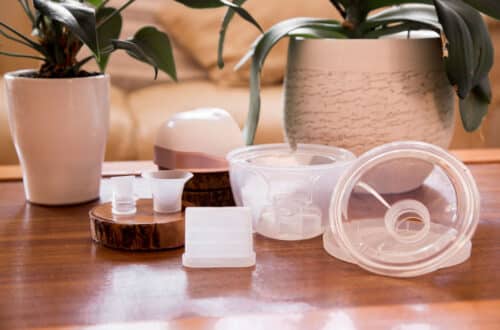
- Take the milk parts apart: breast shield, flange insert, collection cup, duckbill and diaphragm.
- Rinse each part in cold water to remove milk. Cold water stops milk proteins sticking.
- Wash in warm, soapy water, using a brush kept just for pump parts and bottles.
- Rinse twice in clean water to remove all soap.
- Air-dry on a clean cloth or drying rack, loosely covered.
How to sanitise pump parts
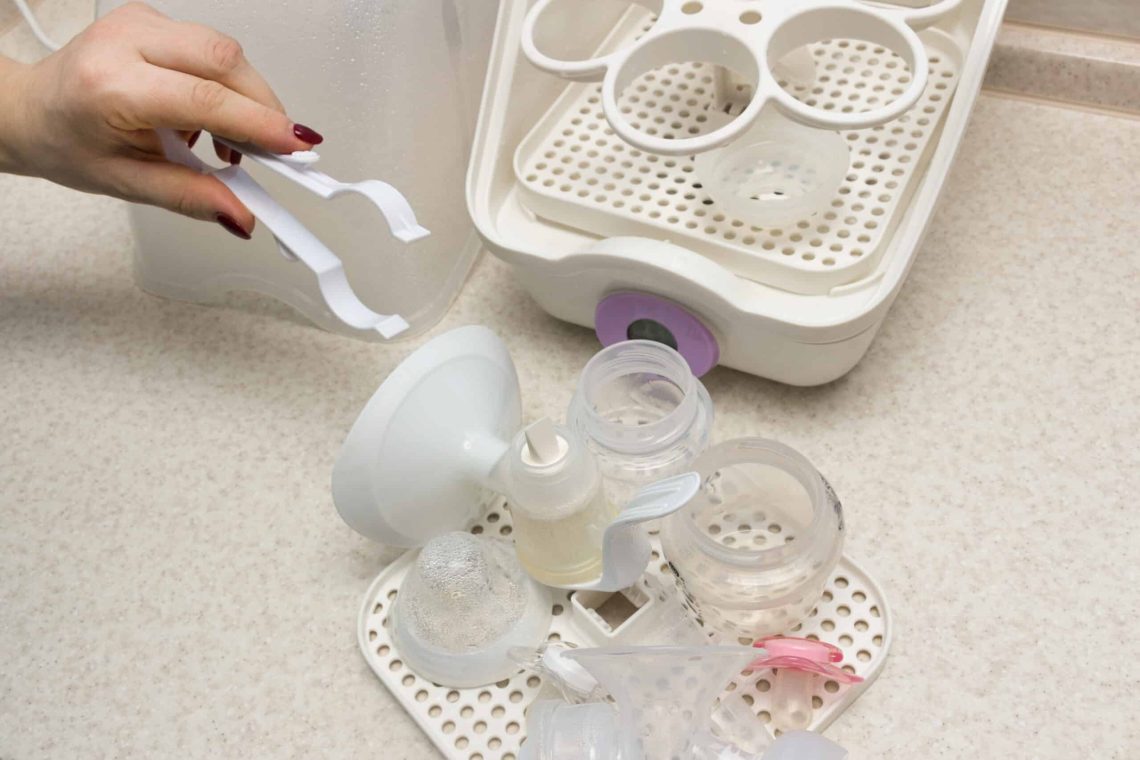
Sanitise the milk parts at least once a day, when they’re new, or when they haven’t been used for a while. Choose one method.
| Method | How |
|---|---|
| Steam steriliser | Use a microwave or plug-in steriliser, following its instructions. |
| Boiling | Cover the parts with water in a pot, bring it to the boil and boil for 5 minutes. Lift the parts out with clean tongs. |
| Cold-water sterilising | Submerge every part with no air bubbles for at least 30 minutes. Replace the solution every 24 hours. |
Only sanitise parts the manufacturer says are safe for that method. Milk It parts can be cleaned in boiled water or a steriliser.
Frequently asked questions
Do I need to sterilise after every session?
For a healthy, full-term baby, washing after every session and sanitising once a day is usually enough. Sanitise after every session if your baby was born early, is unwell, or if you or your baby has thrush. If you’re unsure, ask your clinic or a lactation consultant.
Do parts need to be dry before sterilising?
No. But they do need to be completely dry before you put them away, because trapped moisture lets germs grow.
How long do parts stay clean after sterilising?
If you leave them in a closed steriliser, up to 24 hours. Once they’re out, store them in a clean, closed container.
Can I put pump parts in the dishwasher?
Hand washing is gentler on silicone. Dishwashers can make duckbills and diaphragms stretch and wear out sooner.
Keep your pump at full suction
Washing and sterilising slowly wears silicone parts. Replacements are stocked in South Africa.
Parts and servicingWhen to replace parts